There is a particular kind of October in Gujarat that cannot make up its mind. The monsoon has technically ended. The calendar says so. But the air hasn't received the memo — it sits thick and heavy on your chest from the first pedal stroke, warm in the way that has nothing to do with temperature and everything to do with water. The sky above Yog Niketan that morning was the colour of old concrete. Not threatening. Just present. Unhelpful.
We set off anyway — five of us: Ratnesh, Leen, Adnan, Dharmesh, and me. Five different reasons for being there. One shared understanding that the ride was happening regardless of what the sky decided to do about it.
Leaving the City
The road out of Vadodara toward Halol is unremarkable in the way that only long roads can be — unremarkable enough that you stop noticing it and start noticing other things instead. The conversation in the group that morning was the lazy, early-morning kind — half sentences, riding single file through the traffic, picking back up a thought from three kilometres ago. When you ride with people you know well, silence isn't absence. It's just the pace between words.
The humidity was immediate and it did not let up. This is the thing about a post-monsoon October ride: the monsoon may be over on paper, but the air hasn't caught up, and dressing for that kind of heavy, damp heat is a negotiation you will lose. Within thirty minutes every jersey was doing its best. Within an hour, the best was not enough.
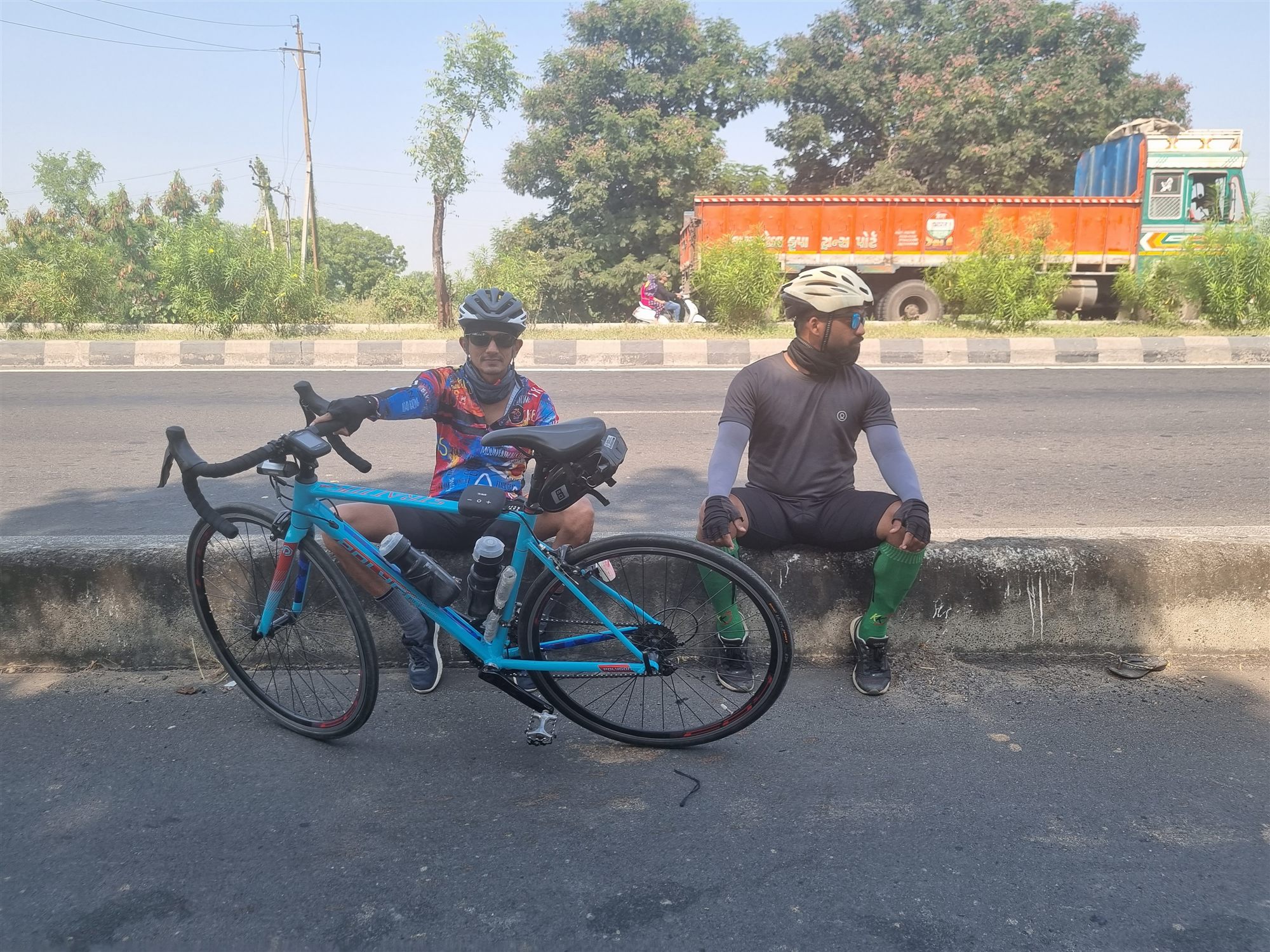
You adapt. You lower your expectations of personal comfort and raise your expectations of the ride itself. This is, as it turns out, a reasonable trade.
Halol — The Puncture
Somewhere around Halol, the ride paused.
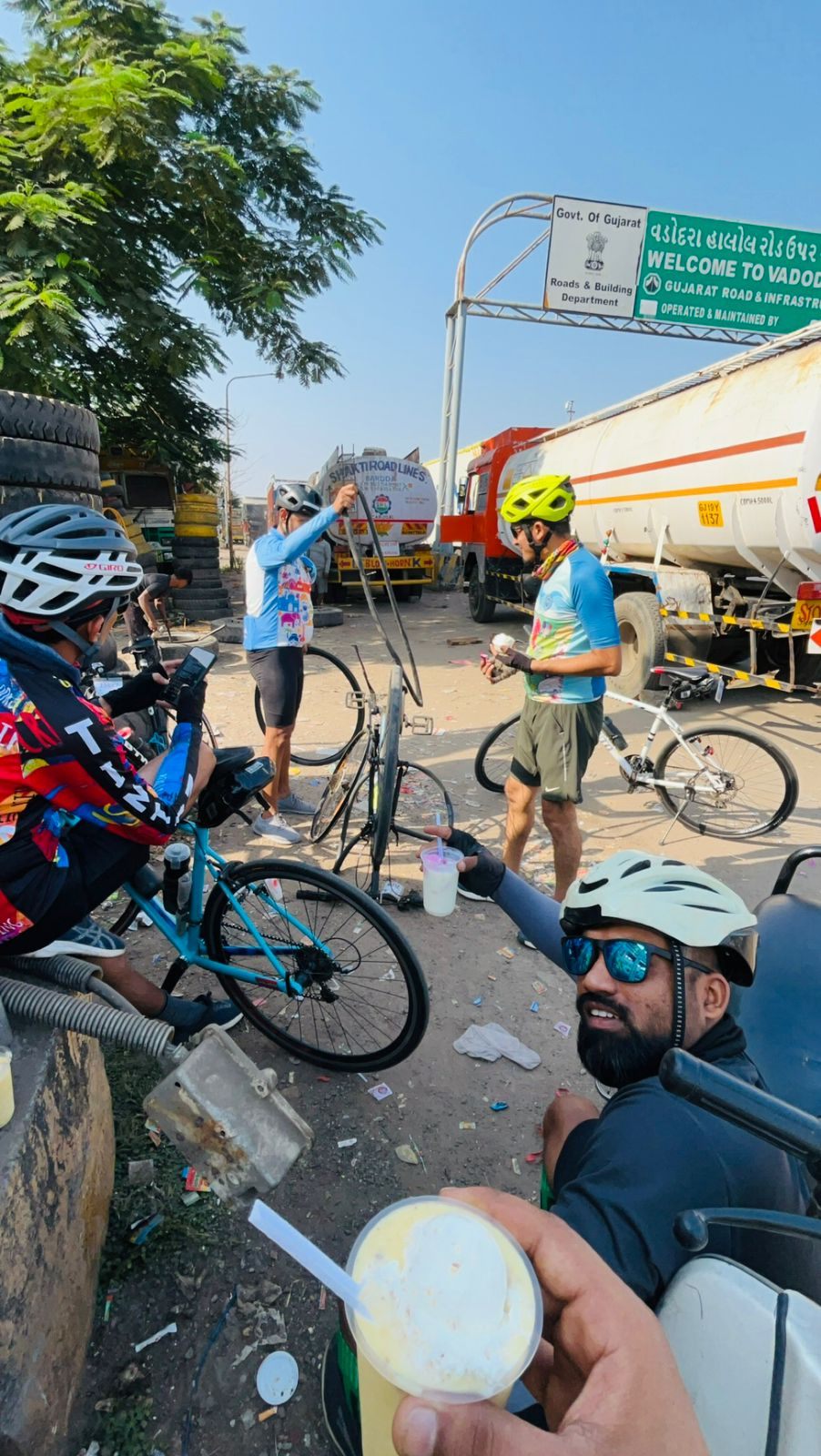
Two punctures, back to back, right by a roadside tyre stall at Halol Chokdi — tyre stacks on one side, tanker trucks parked on the other. Bikes down, wheels off, and enough of a wait that someone got cold drinks into everyone's hands while it got sorted.
The repair took the time it took. Nobody rushed it. This is one of the underrated gifts of riding in a group — a mechanical becomes a rest stop by necessity, the kind of pause the body is grateful for even if the ego isn't. By the time we were rolling again, the sun had climbed higher and the day had settled into the kind of heat that doesn't need rain to feel heavy.
Vada Talab — Where We Stopped
Vada Talab arrived like a reward nobody had explicitly agreed on.
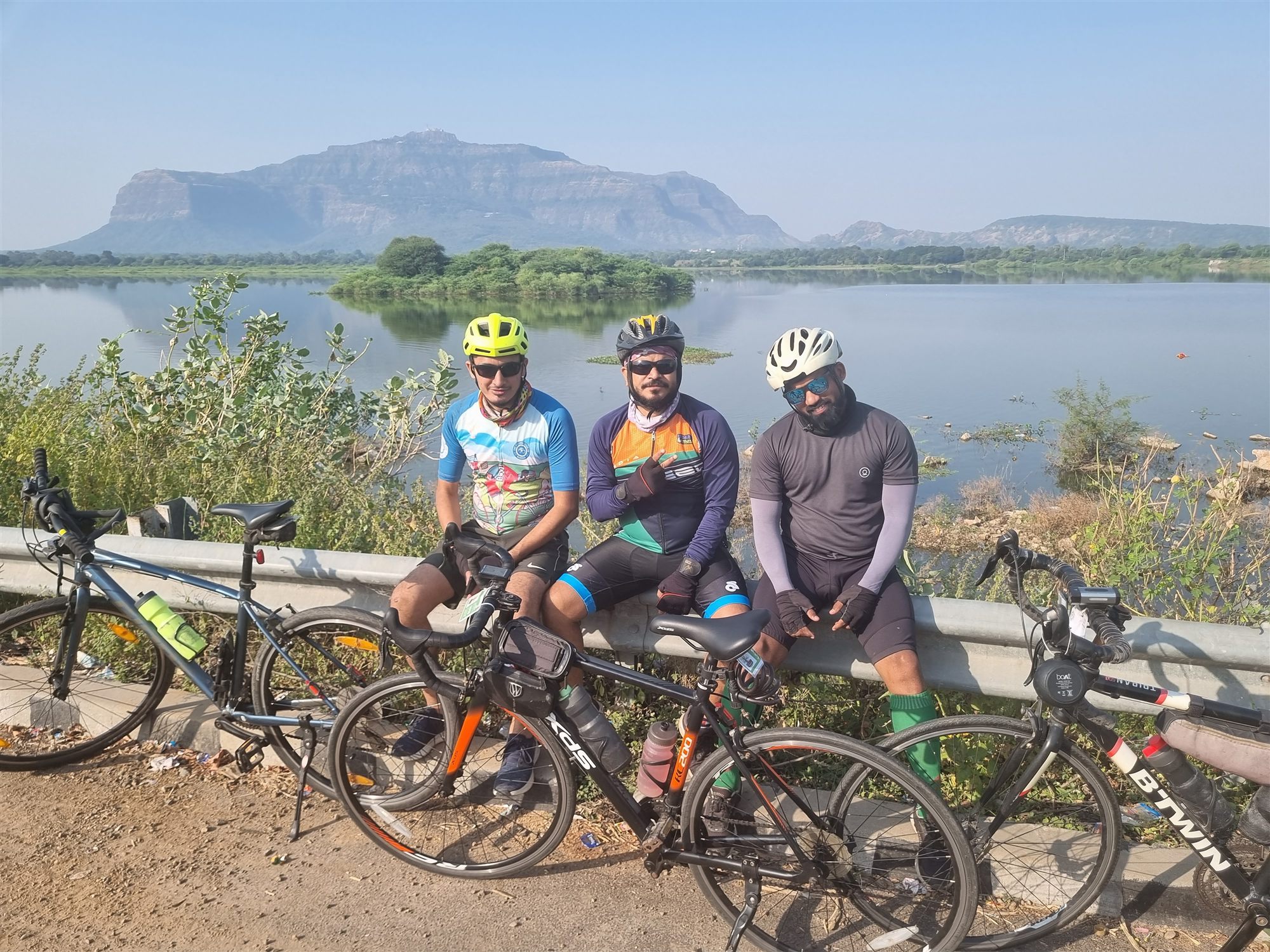
The lake sits at the base of the Pavagadh massif — still water, the colour of the sky reflected back at you, which that morning meant a grey-green that was somehow completely beautiful. The monsoon green on every hillside was extravagant. The kind of green that makes you understand why people write poetry about the season.
We stopped. Unclipped. Leaned bikes against the railing.
And there — behind the lake, rising out of the treeline — was Pavagadh. Or rather, the lower half of it. Above the treeline, where the hill should have continued upward to the fort, the temple, the cable car, the summit — there was only cloud. Thick, low, decisive cloud. The mountain had not cancelled. It had simply chosen not to show itself that day.
The bhajiya arrived in a paper bag from a stall nearby. Hot, crisp, the specific comfort of fried food eaten outdoors after sixty kilometres of riding. We ate standing up, looking at the cloud where Pavagadh was hiding, and nobody said much. There wasn't much to say. The hill was there. We'd come far enough to know it. That felt sufficient.
What Pavagadh Teaches You From the Road
Here is the thing about riding to Pavagadh rather than up it: you arrive differently.
There is no summit moment. No photograph from the top, no cable car, no Kalikamata temple bells. You arrive at the base on a bicycle, legs already tired from the sixty kilometres behind you, knowing you have sixty more to get back. The hill looms — or would loom, on a clear day — and you make your peace with looking at it from below.
On that particular morning, even that was negotiated away by the weather. The summit was invisible. The hill was a rumour confirmed only by the map and by the forested lower slopes emerging through the mist.
And yet.
There is something clarifying about riding 57 kilometres toward something you cannot see. You are trusting the road, trusting the direction, trusting that the thing you came to find is there even when the conditions refuse to confirm it. This is not a metaphor I planned to stumble into on a post-monsoon Sunday. But here we are.
The mountain was there. We just couldn't see it.
Sarvottam Lassi and the Road Home
The return leg is always a different ride.
The outward journey has intention pulling it forward — destination, distance, progress. The return has only endurance. The same road in reverse, the same humidity, sixty kilometres between you and a shower and a meal and horizontal surfaces. The body's enthusiasm for the project has modestly declined. The mind compensates with stubbornness.
We stopped for lassi. Sarvottam — cold, thick, sweet in the specific way that only makes sense when you are an hour and a half from home and your legs are asking reasonable questions about your life choices. The kind of lassi that resolves arguments. We drank it in a silence that was entirely satisfied.
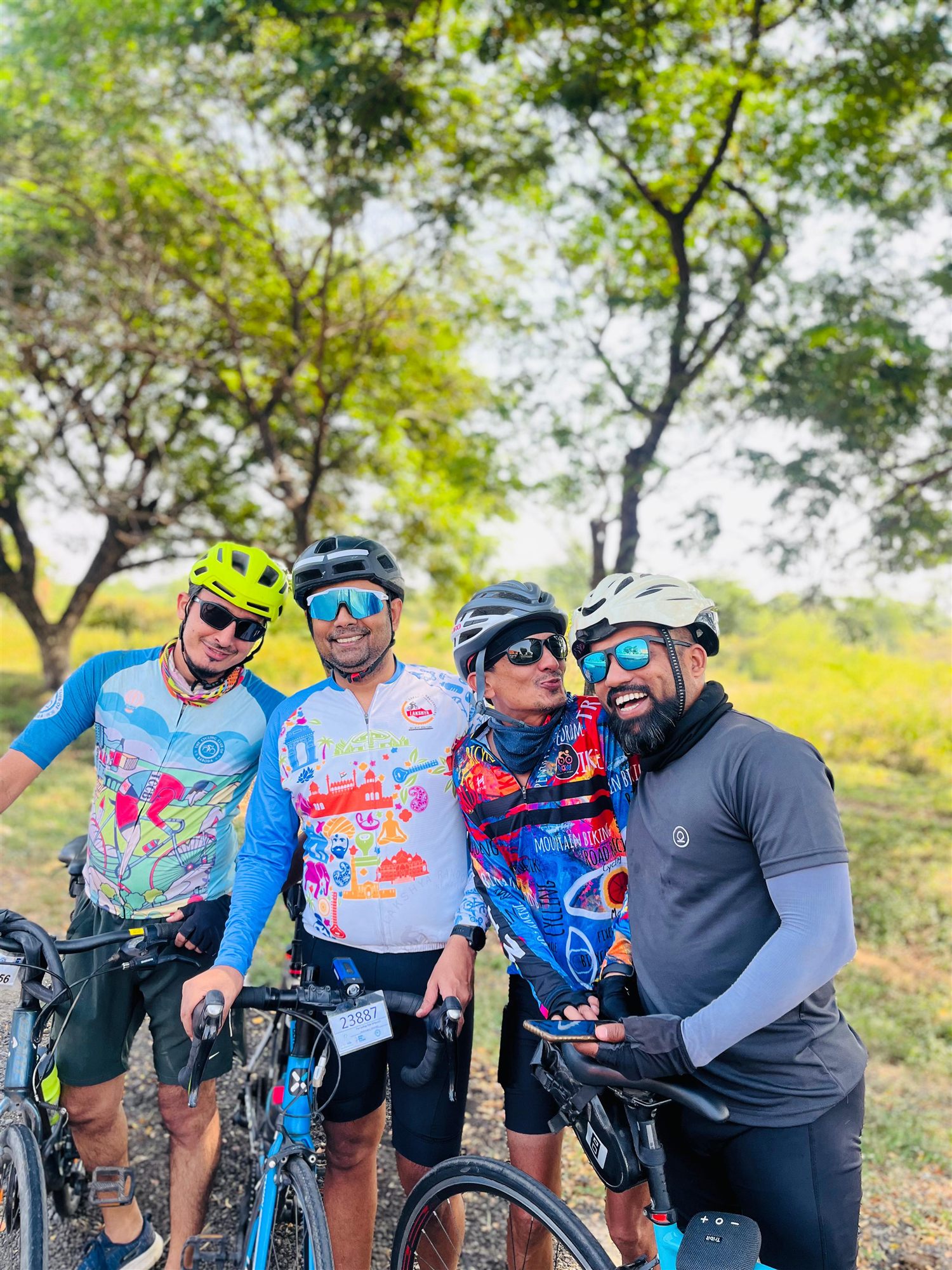
The road back was flatter in the legs, if not on the map. The humidity had not changed. The clouds had not lifted. But the conversation had loosened the way conversations do in the final third of a long ride — more honest, more meandering, less interested in arriving quickly and more interested in the next few kilometres for their own sake.
That is the Sloww Cheetah thing, if I had to put it plainly. Not the destination. Not the number at the end. The specific quality of being fifty kilometres from home on a Sunday with people you trust, with bhajiya still on your hands and a hill you came all this way to see still hidden behind weather — and finding that this is, genuinely, enough. More than enough.
What Stayed
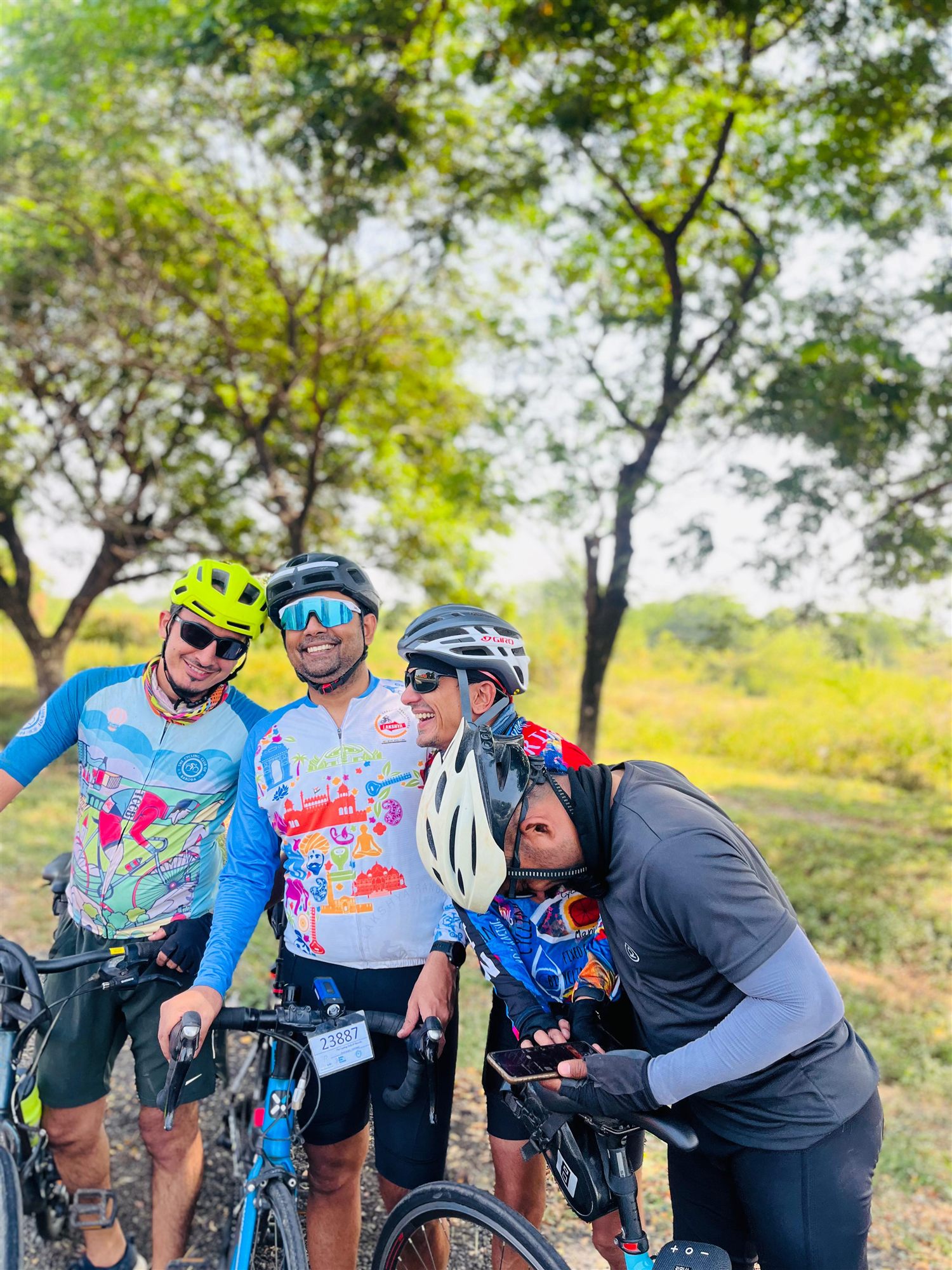
Ratnesh, Leen, Adnan, Dharmesh. Five people who agreed to spend their Sunday pedalling toward a mountain through thick, post-monsoon humidity.
The still water at Vada Talab with the cloud sitting exactly where the summit should have been.
The two punctures at Halol Chokdi, and the cold drinks that appeared while we waited by the tyre stall.
The lassi.
The humidity, which was relentless and which I will complain about again if we do this ride in October.
The 114.8 kilometres, which the GPS recorded faithfully and which the legs remembered for two days afterward.
And somewhere above the cloud line, unbothered by any of it — Pavagadh, exactly where it was always going to be.
Full route details, GPX download and elevation data: Vadodara to Pavagadh — 114.8km Out-and-Back →